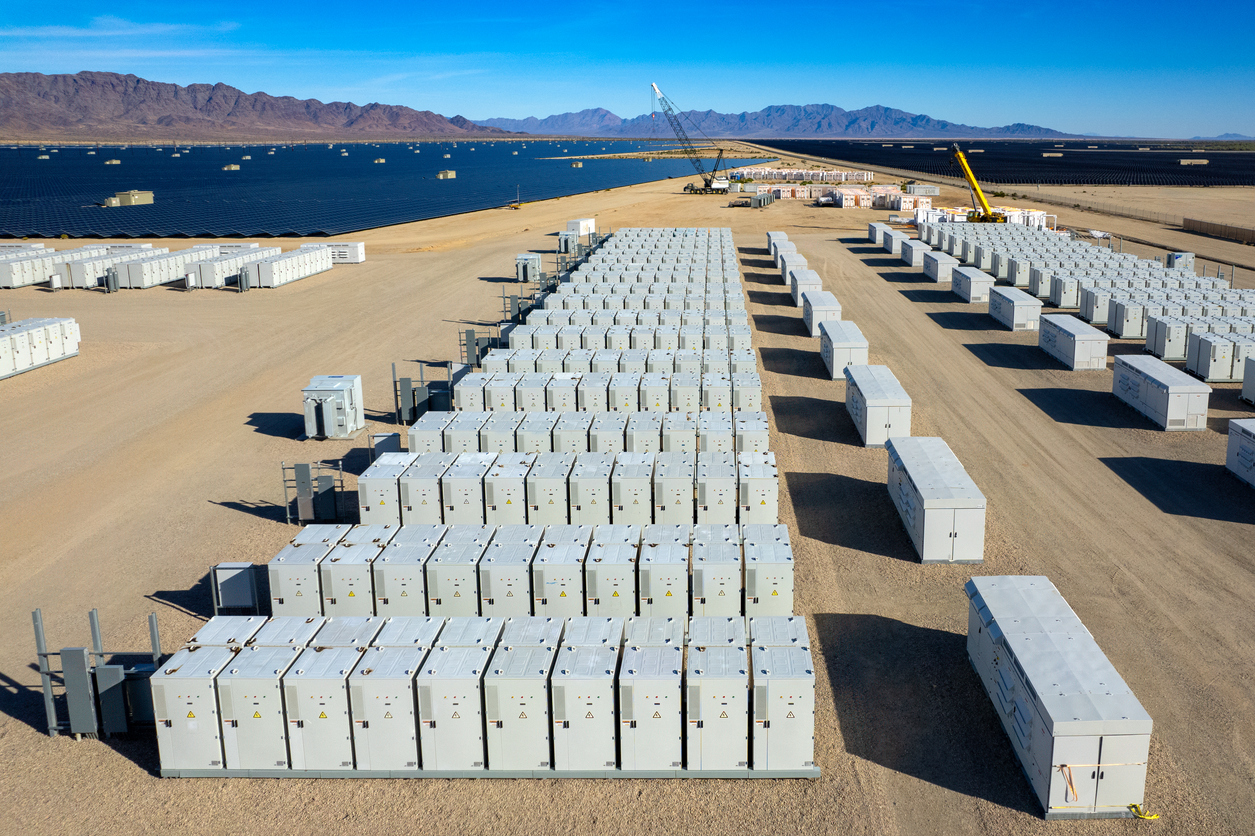
The existence of energy storage solutions co-located with solar, wind, and/or hydrogen assets provides more than just ancillary support to existing energy infrastructure. It enables fixed-capacity generation and transmission to be leveraged further, pushing down price levels across the national power network by enabling wholesale and day-ahead trading markets to deal on the basis of increased supply and better flexibility. For these benefits to materialise fully there are several important regulatory alterations that Ofgem and NESO should be working toward, however. One factor that stands out as particularly obstructive to project development, and will be focused on presently, is the restrictive price controls that reduce incentives for innovation of transmission capabilities. This leads to higher network charges for electricity generators and can reduce the number of potentially viable renewable energy system (RES) projects.
The profit-maximising nature of co-location (explored in a previous energyplains.co.uk post) can increase the attractiveness of such investments. This does not alter the fact that transmission costs still represent a significant drawback, especially in more rural areas that suffer from locational price signals as a result of requiring more transmission infrastructure to operate on the national grid. Where there is the ability for co-located assets to be installed the reduction in energy curtailment they offer makes them an attractive value proposition. Standing in the way of increasing the number of co-located assets though are the investment barriers associated with transmission infrastructure itself. The transmission and grid connection costs that encourage innovation into co-location in the first place continue to stand in the way of implementing it, just to a lesser extent when considered in relation to co-located assets’ better energy yield ceilings. If this problem can be tackled then it puts co-location and its increased use of grid connection capacity onto the front foot of asset profitability measures.
Feasibility studies and impact assessments are the bread and butter of ensuring that projects are development worthy. Yet the worst delay that stop RES sites from being developed continues to be grid connection. The uncertainties that this causes in the development of projects can kill many before they even begin. An increase in energy yield potential from a single grid connection order can optimise this process, allowing for integrated business plans to maximise the MWh transferable from a single project site. Co-location can be especially helpful in removing the need for a new grid connection at all. Retrofitting HVAC connections in this way is not as profitable, however, as output is restrictively dependent on transformer capacity. For this reason it is mainly used for improving older asset performance rather than being a popular consideration for new developments.
The limitations that prevent new connections being cleared are as much related to the transmission owner business case as they are that of the generator. Network charges for the use of the transmission system are a significant cost to electricity generators. The 108MW Beinneun Wind Farm in the Scottish Highlands paid £1.9m in transmission network use of system charges (TNUoS) for its 2020/21 fiscal year. This is not unusual for a power plant in Scotland that uses transmission cables for significantly longer stretches than its South-East England counterparts, as it more regularly fulfils energy requests from higher demand locations further afield, taking up more cable traffic as a result. Reducing the burden of transmission costs on asset profits is key to ensuring a successful energy market, especially if wind-rich areas like the Highlands are to have their renewable energy capabilities effectively developed.
Co-located energy assets represent innovations in transmission capabilities that offer enough to end consumers to make it worth investing in productivity gains from both generation and transmission sides. From the perspective of transmission and distribution infrastructure the increase in investment needed to facilitate new connections over the coming years will be eye-watering. Yet the motivations provided to transmission owners to create their own revenue (RIIO-T3), will seemingly continue to not cater sufficiently to the potential innovation that they can achieve either on their own or in partnership with third-party businesses. This shows a lack of intention to commit to supportive regulation that would deliver cost savings to co-located assets, allowing more private sector involvement in this area and passing on savings to end-users.
These existing price control incentives, which determine the revenue that can be garnered by transmission entities, rightly focus on reducing bottom-line costs, but this is done in such a way that it comes at the expense of delivering new innovations that can significantly enhance UK grid operations. The way that it sets this imbalance into motion is by effectively taxing total productivity improvements made by transmission owners above the level predicted in their business plans provided to Ofgem. These business plans are required so that revenue allocation can be decided. With transmission and distribution being a natural monopoly, having uncompetitive pricing in such a scale-reliant industry is an unattractive proposition, so predictive revenue allocation became received practice since distribution networks were largely privatised in 1990.
Yet the price control incentives that limit productivity increases entrench restrictions on gains that can be made by transmission owners during the price control period. They do this by taking the information deficit suffered at the beginning of a price control period where financing possibilities for the entire 5-year duration are unclear, and they keep transmission owners shackled to these predictions. Phil Burns, director of Frontier Economics, calls this “the outperformance wedge”, and for this reason the capital allowances set by Ofgem have consistently been underspent by transmission owners who seek to keep steady revenue at their allotted levels instead of aiming to increase it- potentially along with end-user satisfaction.
While re-openers that allow for proposals of investment cases between price control rounds do exist, they have regularly been rejected, provided for inadequately, or decided upon with undue delay. Where long lead times for equipment, higher unit material costs, and inflation all change circumstances on an unpredictable basis, this barrier to regulatory approval is often obstructive. Reforming incentives so that a split in their identification of which type of spending is permitted can allow for greater capital investment in place of operational expenditure, which should be alternatively identified as a business-as-usual cost.
Identifying potentially innovatory investments means that customer deliverables like network capacity improvements can then be tied to revenue growth, and they can be done in a more flexible manner that does not require their large-scale preparation and integration within the business plan incentive structure- a structure that prioritises low-cost advances in grid infrastructure in its cost efficiency assessments. Innovatory impulse can be encouraged in this way on both expenditure and revenue sides of transmission owners’ operations by identifying and catering to different spending practices, while encouraging more flexibility in investment phasing.
Such allowance for innovation in transmission and distribution capabilities would be vital for the business cases of co-located generation and BESS facilities, especially where advancements in HVDC technology can increase cable load capacities, reduce cost per MWh of transmission, and allow for hybrid interconnectors that are able to both inject and eject power at different locations. This last innovation is especially key to cost saving for co-located generation and storage assets. However, the lead time for sourcing the required HVDC cables is described by ENTSO-E as having doubled as a result of supply-side difficulties, escalating the pre-existing issues with revenue allowance in the RIIO regulation. Although seemingly not so significant when taken at face value, every marginal price-point improvement made in transmission infrastructure delivery scales to significant reductions in TNUoS charges when measured over the consistent year-round usage of the cables.
These transmission constraints can be seen as a leverage point in an industry that has seen turbulent returns as a result of recent macroeconomic challenges and regulatory inconsistencies. There are of course a host of other points on which co-location depends other than transmission capabilities, many of which relate more directly to the RES project itself rather than charges associated with its operation, but they are all deserving of extended attention and so only innovatory and regulatory parts of the transmission aspect of co-location were addressed here. The grid context of co-location and the difficulty of regulating for the transmission charges that contribute to its attractiveness are both reason enough to provide focus to these issues. Solving the problems they pose in an effective way, however, is a matter of careful regulatory attention and good knowledge of the business prospects of RES practice, which will continue to evolve as the national grid and power markets develop.
Here we have shown that there is more than can be done to improve the transmission overheads that make co-location such an attractive proposition for increasing revenue from a single project site. Yet it is also apparent that should these innovations to the grid allow for more connection traffic, co-location is a highly effective way of making the most out of the investment put forward.