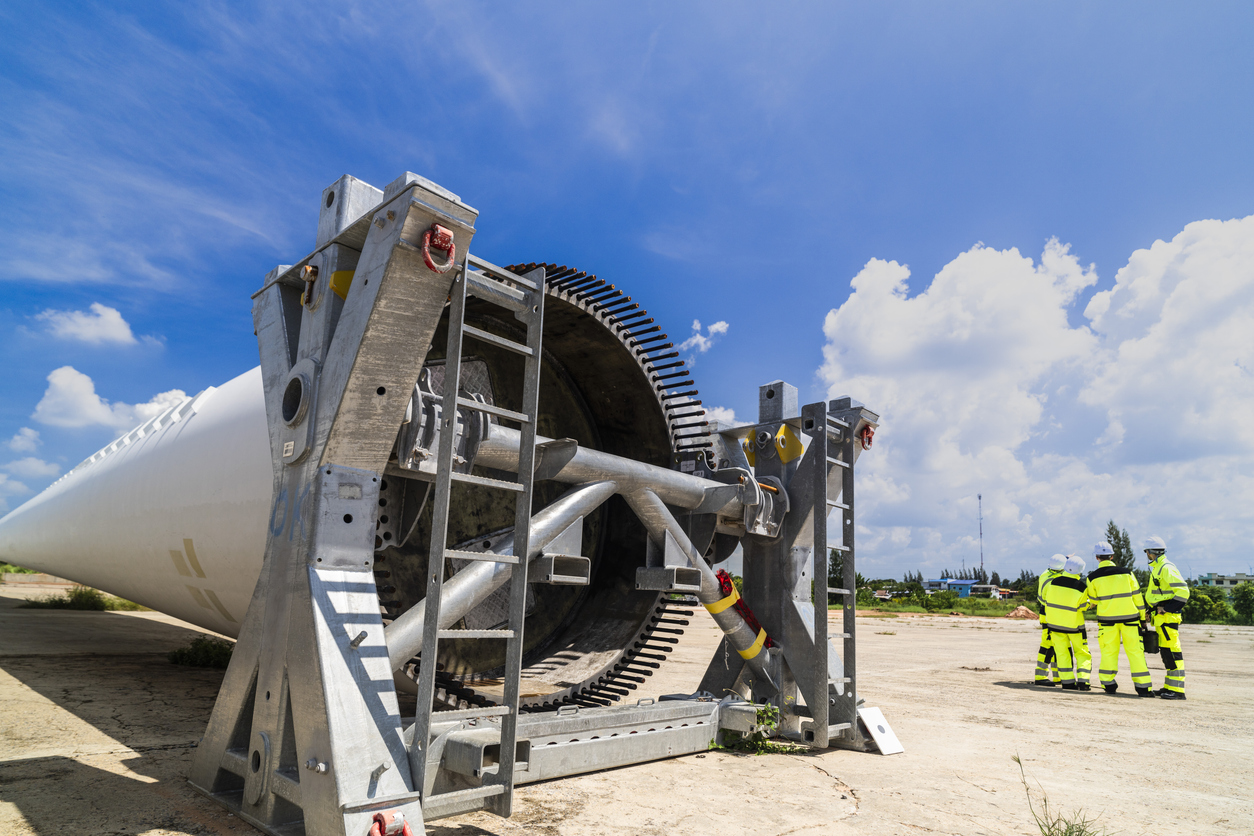
A huge proportion of the costs in developing wind turbines for energy generation facilities derive from the procurement of steel. Everything from the nacelle, to the generator, rotor, the turbine foundation itself and the inter-array substation cables requires steel. This contributes hugely to putting the estimated overall material component cost requirement of a wind turbine at over £1 million per MW installed (2019 estimation). It was calculated that the 25mn tonnes of steel required over the next 25 years for the offshore wind sector in the UK alone will represent £21bn in purchases. This shows how the two industries of wind power and steel manufacture are tightly aligned.
Being prevalent in the manufacture of solar PV modules also, steel and its associated costs over the coming years are clearly of great relevance to the energy sector. But that is not all steel is good for, as the manufacture of vehicles, batteries, real estate, pipework, electronics, and more, all require steel. Integrating low-carbon steel manufacturing capacity into national economic development can be an effective way of supporting these industries while counterbalancing the increasing carbon levies like the UK ETS carbon price set at £41.84 per tonne for 2025. When combined with the introduction of a heavy industry carbon border adjustment mechanism by 2027 there will be little option but to invest sustainably into innovative steelworks, likely often closer to home.
This is not the only reason for doing so, though. The skills related to steel manufacture are more valuable to an economy than the raw material. The importance of steel to developing an economy is paramount and the UK has the competitive advantage of being an early industrialiser, meaning that it has surplus (at present) capacity of scrap steel to be remade for new purposes. This would replace the current status quo of exporting scrap steel out to countries such as Turkey only to then import finished products with value added elsewhere.
With steel prices currently sitting at around $500 per tonne, a large wind turbine using a regular amount of steel can require £1 million from the end user in total turbine material costs, marked up from an original £50,000 worth of raw steel. As the UK currently produces 10Mt of scrap steel every year, the possibility of capitalising on this resource while retaining economic circularity and carbon efficiency of an semi-internalised supply-chain would provide financial and strategic advantages to domestic businesses. Although the UK provides significant added value to manufacturing processes (second only to Italy), this is not currently accompanied by a strong steel industry base to supply it. In order to protect industries like construction, automotive, engineering, and defence, resilience in the steel segment is of critical importance to contemporary economies like this one, while contributing to emissions reductions through innovatory investment in the process.
Seeing as steel manufacturing is so central to many economic sectors, effectively integrating it into supply-chains can increase resilience and ease of access. Bringing a domestic steel industry into a competitive position, however, represents a challenge as buyers with lower value-added, steel-intensive tasks are often sensitive to changes in the materials’ price. With 20-40% of steelmaking costs relating to energy usage, bringing energy prices down can benefit the whole steel supply-chain. The average electricity price paid by UK steelmakers for 2024/25 has been £66/MWh, compared to £50/MWh in Germany and £43/MWh in France. In switching to electric arc furnaces (EAFs), steel sites will see their energy consumption more than double from their current level, which is already equivalent to 800,000 homes. These tough conditions are made all the worse by the recent tariffs placed on the international steel by the US administration, shaving a great deal of revenue from exports and introducing additional pricing pressure from cheap exporters seeking to replace these revenues through the EU and UK markets.
The blasting and alloying of iron to make steel is a highly carbon-intensive activity that requires huge amounts of energy and heat. The traditional method has involved coke, which is a less smoky, carbon-rich fuel alternative to coal, or natural gas. Coke and natural gas have been used in blast furnaces for direct reduction as well as the final-stage steelmaking process. Directly reduced iron (DRI) is, however, a significant challenge for the transformation of the steel industry as this segment is currently a relatively concentrated market that requires scaling-up so that emissions related to its feed fuel (coke/natural gas/H²) can be halved by 2030. This initial stage in the steelmaking process allows for greater energy efficiency across the entire procedure as DRI can more easily be made into steel. This also prevents the need for an integrated traditional coke-powered blast furnace site. Even using natural gas in the DRI route as opposed to the blast furnace route can reduce process CO² emissions by 40-60%.
The major reductions in the steelmaking process come from using green hydrogen alongside electric arc furnace (EAF) technology, however. This process can reduce the average steelmaking emissions of 1.91 tonnes CO² per tonne crude steel down to 25kg CO² per tonne crude steel. This relates to a joint Swedish venture called the Hybrit Project. Similarly, a Chinese group, HBIS, has recently installed a DRI facility using ENERGIRON technology to allow a mix of reducing agents in combination with some CO² removal to bring CO² emissions down to 125kg per tonne crude steel.
For the latter steelmaking stage after the iron ore has been reduced, EAF and basic oxygen techniques are the two most common. EAF technology is being invested in at a rate that represents a peak since its introduction 80 years ago. 31% of current projects use EAF tech, while 47% of those in the pipeline are expected to take it up. There are European champions that are using these new technologies, with Swedish companies having made inroads and Tata steel having recently gained planning authorisations for EAFs at Port Talbot. Of course, using hydrogen fuel instead of natural gas or coking gas is preferable, but this requires proximity and cheap electricity for electrolytic H² conversion before more electricity is used for the EAF stage of steelmaking. There are advantages to using these processes, however.
Using the H²-DRI-EAF process provides energy and grid flexibility. Firstly, there is no need for specific feedstocks so long as electricity can be made, meaning that the extreme levels of heat required can be created with both renewable and any H² electricity. Secondly, because of the increased flexibility of having an energy input that can be scaled up and down at will, unlike coke, EAFs do not have to be kept on 24/7. The benefit that this provides is that it can use electricity at low-demand hours, adjusting production accordingly. This also works for when grid surplus would be better absorbed than curtailed. Active power feeders can further streamline this process and ensure that the large and variable power requirements of EAFs do not cause grid instability. This flexibility is essential to capitalising on low energy costs wherever possible.
Reducing energy prices is therefore becoming evermore critical to ensuring stability in this sector. Alongside the various energy efficiency techniques such as using active power feeders, steel manufacturers can partake in long-term capacity agreements with electricity generators to fix their prices for a 5-10 year period. Doing so would help propel domestic steel manufacturing towards its near-term 9 million tonne capacity potential.
Actually bringing electricity costs down for industrial off-takers is a matter that relies heavily on stability, efficiency, and pricing across the energy market. Due to its increasing energy burden, the steel industry requires a level of integration with the electricity market so that it can benefit most efficiently from the regulatory signals created. Market reform proposals have as a result been received and contributed to with unique fervour from the steel industry.
One of which suggests the establishment of a green power pool (GPP), which would create a single renewables-only electricity market containing a bundled PPA that secures cheap, long-term power for steelmakers and potentially other energy intensive industry actors as well. This would mean that these industries are unaffected by the high marginal electricity cost that natural gas production and trading inflicts on businesses and consumers alike through the wholesale market. Since EAFs are so reliant on power, reducing this cost can actually bring the EAF process onto cost parity with blast furnace sites.
Other areas of major growth in the coming years can be complemented by the development of a competitive domestic steel industry, and the onshore and offshore wind sector represents an investment in energy that can both support demand for steel while allowing for cheaper energy prices to further enable steel production to flourish. This kind of combination of fortunes has been realised on the Thyssenkrupp Hagen steel site, where a wind farm was installed with a direct connection to supply 40% of its yearly energy demand. Similar projects are underway in the UK, with EDF’s Tees Green Hydrogen initiative aiming to bring green hydrogen online through offshore wind and solar PV for local industrial players that include British Steel’s Teesside operations. These kinds of synergies allow for increased efficiencies through cheaper transportation of materials, collaboration opportunities, simplified supply-chain issues, and of course access to nearby energy- especially important when utilising H²-DRI-EAF steelmaking processes, as hydrogen can be difficult to transport for long distances.
Integrating steel into local industrial supply-chains can strengthen all the businesses involved in buying, selling, or servicing steel manufacturing capabilities. Enabling competitiveness on top of this kind of planning by providing energy market reforms and targeted investment can support cheaper steel and thereby provide value across entire supply-chains by effectively catering to the industrial hinge that is steel manufacturing. Enabling this level of circularity while bringing lower emission processes online would create a self-supporting industrial cluster at the heart of the energy sector and its net-zero goal. It has been shown that energy prices are a big obstacle in ensuring this kind of progress is made, but the result that would come from developing domestic H²-DRI-EAF facilities is a competitive sector, and it can be propelled into existence without onerous outlays in public resources or regulatory movements.