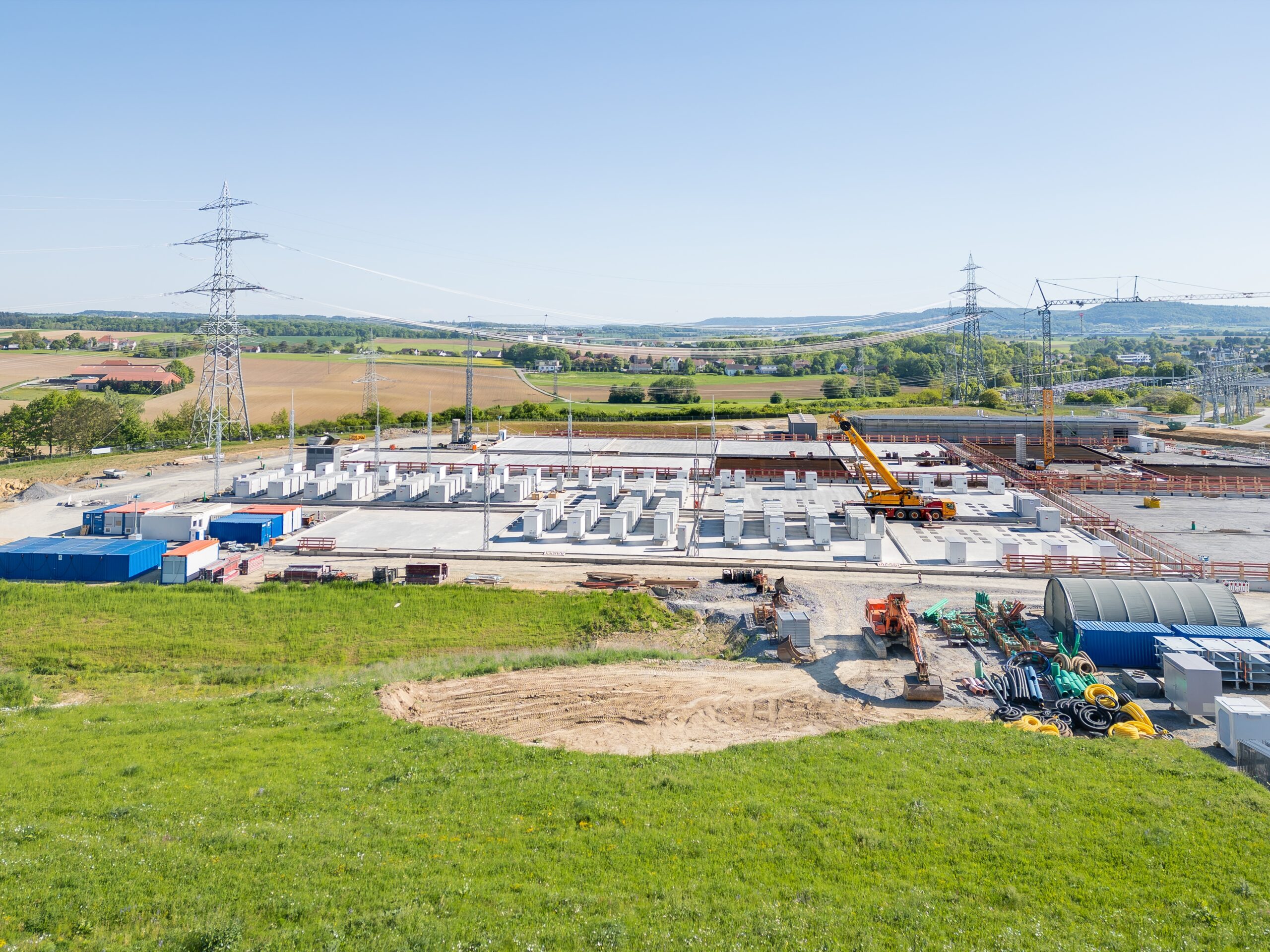
Battery energy storage systems (BESS) are one of the fastest growing power technologies in the energy sector, with 2024 installations increasing 53% on the year before, 98% of which was lithium-ion. BESS is a critical part of new grid compositions, especially in the UK where offshore wind will form the backbone of Britain’s clean power 2030 target, requiring storage solutions to even out early evening supply shortage by discharging power that had been charged in the afternoon during that low demand period.
With its rapid development BESS has seen a similarly drastic change in the markets from which it can make the most revenue. This comes down to regulatory standard being relaxed and the accompanying development of increasing storage supply. This article will give an indication of the changes that have occurred and will likely occur in the BESS market, posing the question of just how central to power markets can these storage systems become?
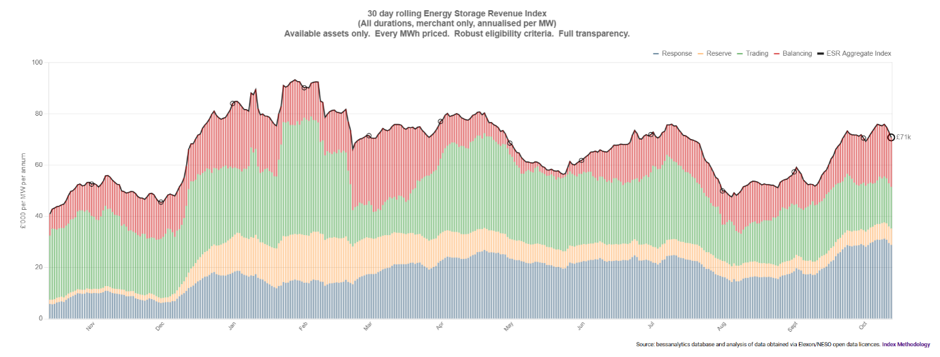
As renewable energy capacity is fast being developed into grid networks, frequency response services have become increasingly critical as BESS operators with contracted response duties are more often called in to bring systems characterised by intermittent forms of generation back to the 50Hz deadband- this deviation occurs where too much or too little power generation makes its way into the system, as is the case where conventional generation assets shrink in relative capacity compared to other types of power plant. Yet even though frequency response is an essential part of the revenue stack of BESS systems, reflected by revenue increases in absolute terms- in relative terms there are other sources of revenue that are overtaking this once dominant income stream for BESS.
The graph above shows a general picture of the revenue stack for BESS but additional context tells us that over the course of 2023-2025 in Britain as well as other decentralised energy markets, big changes in the BESS revenue spread occurred. Where previously most BESS revenue would be made from providing frequency response services, lately the level of participation of BESS operators in the main wholesale power markets and balancing market has risen dramatically. This shows that there is a growing appetite among BESS operators for providing energy arbitrage at critical grid constraint locations in much the same way that gas peaker plants have been doing in the UK since the 1980s.
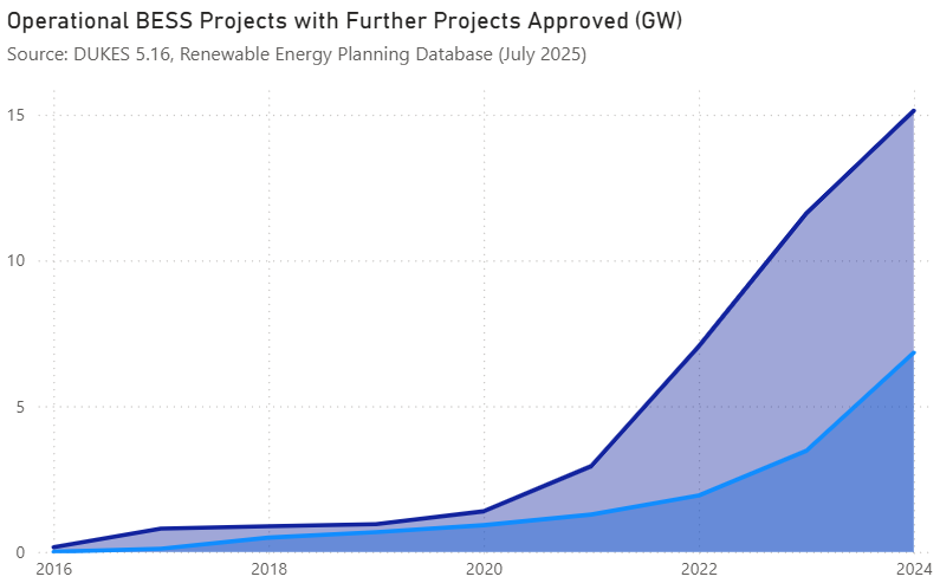
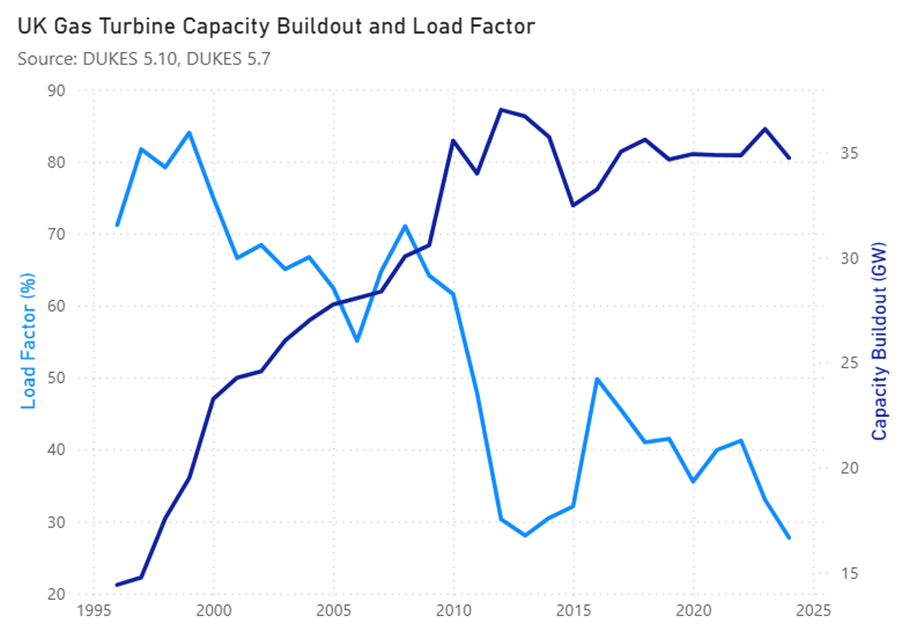
Batteries currently make up around 8GW of installed capacity in the UK, yet in DESNZ’s ‘Clean Power Capacity Range’ about 25GW is reserved for this technology, marking a 300% increase on current levels moving into 2030. Gas CCGT generation will still make up around 35GW of capacity but in relative terms its size in the generation mix will have decreased substantially as it transitions into permanent peaking operability.
The graph below displays this evolution of gas generation characteristics in the UK. The decreasing load factor (electricity generated vs theoretical maximum for plant size), shows that there has been a growing orientation of generation around low-capacity high-return markets such as the balancing mechanism. This market prioritises dispatchable power such as that of CCGTs because it can be ramped up or down at will. A previous energyplains.co.uk article looked at how the costs in this market might be managed. The impact of a surge in BESS capacity will disrupt this source of revenue for gas plants as it is expected that BESS revenue streams will centre around wholesale and balancing mechanism deployment, driving down costs in two of the main markets for CCGT plants.
Price and market viability
Front-of-meter BESS can operate in the range of 45-100 GBP/MWh (60-130 USD), making it competitive in multiple power markets given strategic charge cycling. Average price spreads across European power markets are similar, meaning that there is the opportunity to make high margin returns by charging with off-peak wholesale prices and discharging in the early evening on the wholesale or balancing market. The scaling up of commercial BESS in the UK balancing market has contributed to more stable prices and a competitive market that has kept within a modest distance of 2020’s balancing offer prices at around £100/MWh (or 10p/KWh).
These figures place BESS into a competitive position across global markets when adjusted for local costs, especially considering that the variable price of generating electricity with gas can be unpredictable. Looking at the graph below showing gas prices since 2020, it becomes clear that global gas generation leaves room for improvement that battery storage can step into.
Issues surrounding the global market for battery components complicate the picture, however. The IEA’s Critical Mineral Outlook predicts that most graphite and rare earth mining will continue to come out of China over the next 10 years, as well as most mineral refinement necessary to this industry. The composition of British BESS industry import/export trends reflects the global market, with developers relying on Chinese cell manufacturers for the majority of installed capacity. With current export restrictions being raised by China against graphite and cathode materials like nickel and copper, there is the strong possibility that sourcing necessary components for developers becomes delayed. Previous iterations of Chinese export controls followed a case-by-case approach, but the current set of restrictions are more wide-ranging than the last.
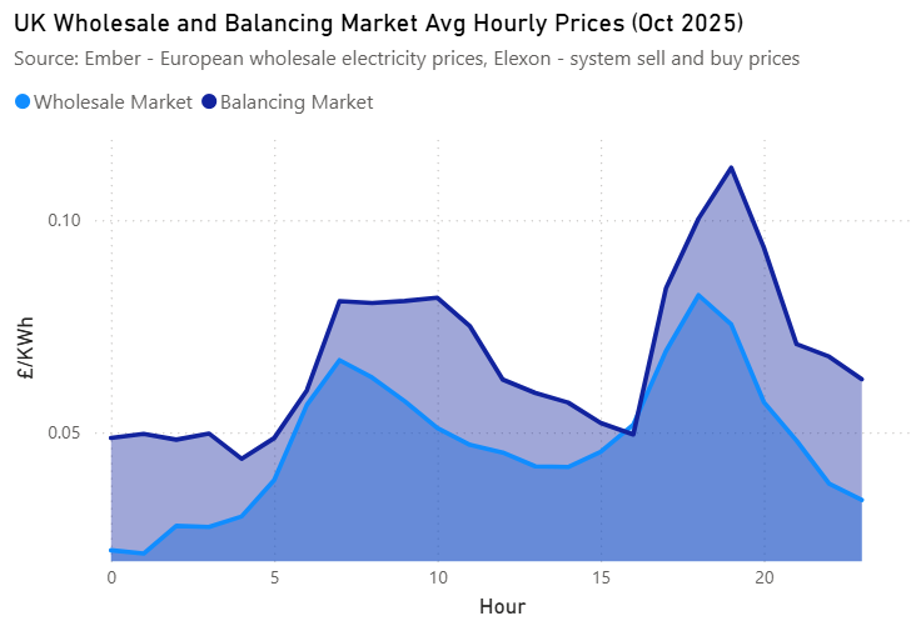
With approved BESS development capacity topping out at around 20GW this year and projects taking on average 2 to 3 years to complete, the UK’s 25GW 2030 target seemed a stretch even before market headwinds. Looking at it from an open perspective though, going by current capabilities and the lack of sufficient price competition with BESS for short-term power ramping from gas plants, the market situation in the UK and globally indicates that there remains huge opportunity for strategically sited BESS to freely capitalise on its advantages across wholesale market spreads and balancing mechanism flexibility wherever investment conditions allow for a quick enough return.